We Hatched AI Dragons: Now Ride Them or Be Eaten
 We stepped into the fire and hatched our own dragons. Now comes the hard part.
In Game of Thrones, Daenerys Targaryen steps into the fire and emerges with three newly hatched dragons. They are magnificent, terrifying, and—if left untamed—entirely capable of burning down the world that birthed them.
By creating modern artificial intelligence, we have hatched our own dragons. The era of debating whether we should have hatched them is over. They are here, they are growing fast, and we now face a simple, existential choice: learn to ride them, or be eaten.
Right now, there are two very different philosophies on what to do with these creatures. One approach, popularized by labs like OpenAI, is to let the dragons fly off on their own—unleashing them to autonomously grind through 720 hard problems while humans watch from the ground, keeping score. It is impressive, certainly, like watching a wild beast hunt.
The other approach is to climb onto the saddle.
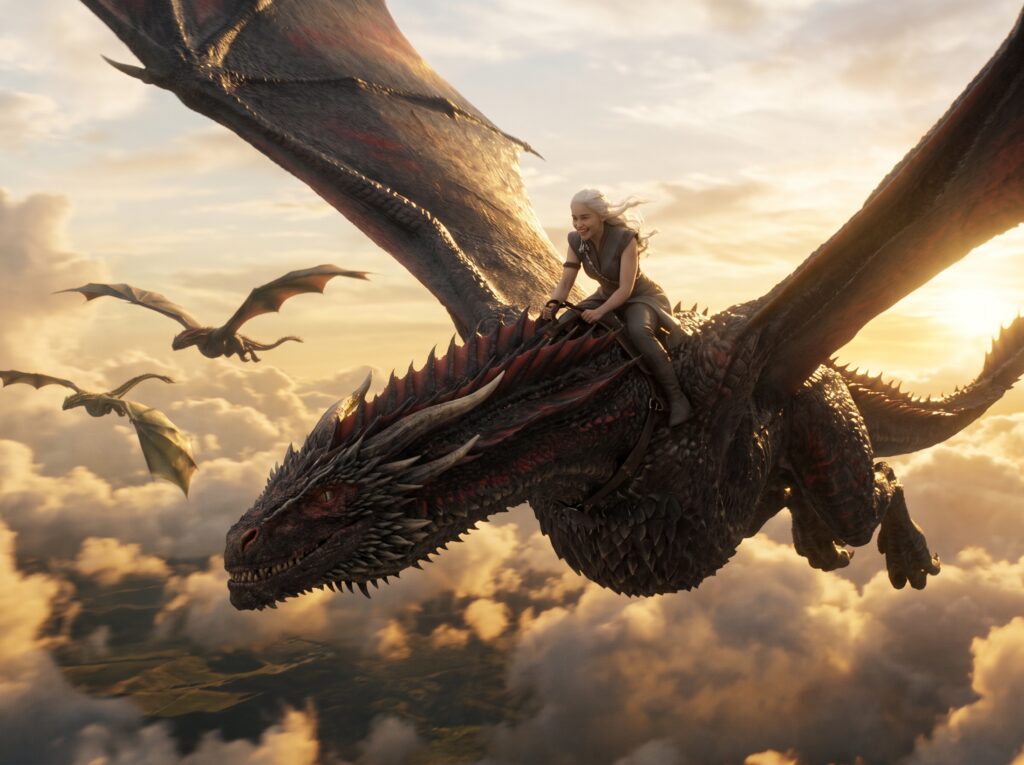
We are already seeing what happens when a skilled mind takes the reins—like Levente Alpöge riding Claude into the deepest, most unforgiving territories of mathematics, aiming straight at monoliths like the Riemann Hypothesis or the Navier–Stokes Millennium Problem. This isn’t about replacing the human intellect; it is about amplifying it to a scale we could never reach on foot.
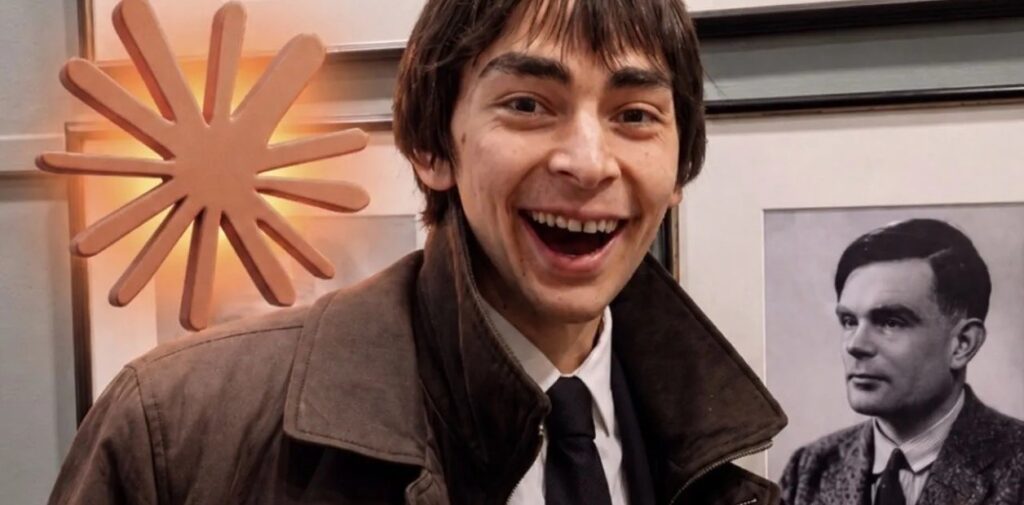
I know this feeling firsthand.
For years, I wrestled with a formidable problem of my own: finding the continuum limit of the Euler ensemble in decaying turbulence. Months ago, I climbed onto the back of what was then still a “baby dragon”—an earlier version of Claude—and rode it straight to the solution. It didn’t hand me the answer out of thin air; it flew where I steered, helping me clear the algebraic fog until the underlying structure finally snapped into focus.
And the dragons are no longer babies.
Recently, working with a mature dragon from Google Research—complete with a fittingly named harness called Cogentic—my collaborators on the Google team and I took that breakthrough to its ultimate conclusion. Together, we formulated 95 theorems and formally verified every single one of them in 760,000 lines of Lean 4 code, rigorously proving my quantum pendulum conjecture. (If you want to dive into the physics of how classical turbulence hides a quantum pendulum beneath its chaos, take a look at my companion post here on the site, Quantum Pendulum of Classical Turbulence.)
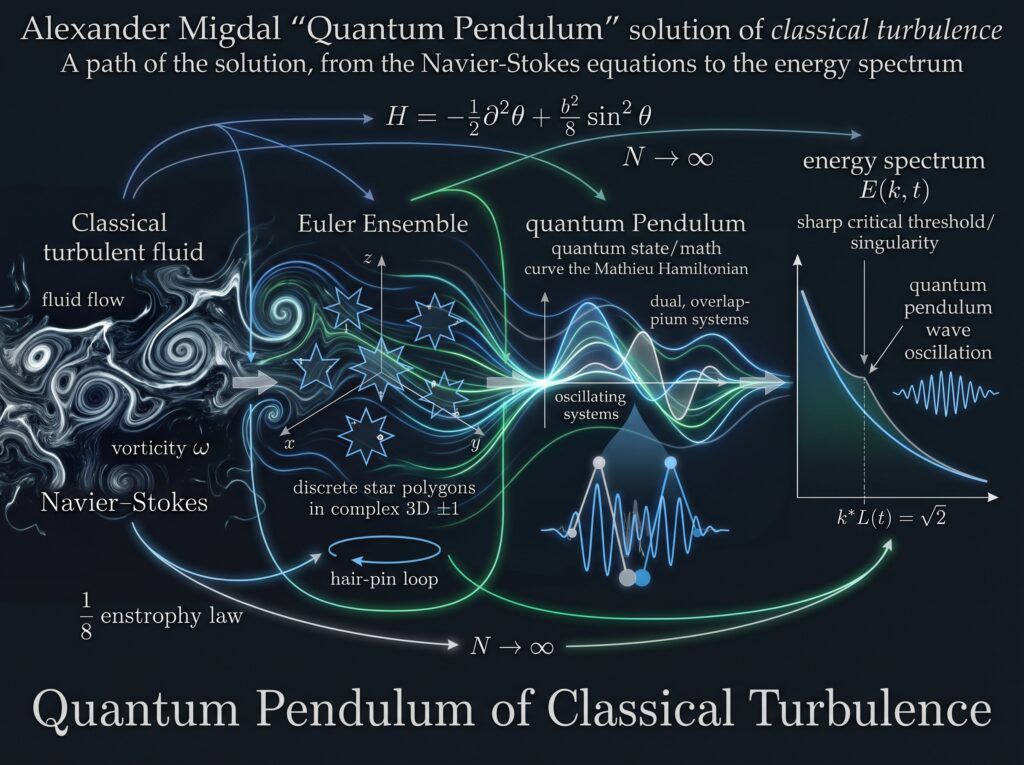
Watching a decades-old intuition about turbulence lock into airtight, machine-verified mathematical certainty changed how I see the future of science. I don’t fear these machines, and I have no intention of standing on the sidelines while they reshape the world. In the near future, I foresee merging with AI even more closely—pushing the boundaries of what a human mind and a silicon intelligence can discover together.
Yet there is one boundary I will never cross, and one thing no dragon can ever take from its rider. You can fuse your intellect with the fire, fly higher than any generation before you, and still keep your human soul, your curiosity, and your ethical values completely intact.
The dragons are awake. Grab the harness.